
Description
INDEX allows you to return the value of a cell by specifying which row and column to look at in a specified array.
Syntax
INDEX(reference, [row], [column])
-
reference- The array of cells to be offset into. -
row- [OPTIONAL -1by default] - The number of offset rows. -
column- [OPTIONAL -0by default] - The number of offset columns.
Sample Usage
INDEX(A1:C20, 5, 1)
How to use INDEX
To use the INDEX Formula, start with the Excellentable you would like to edit.
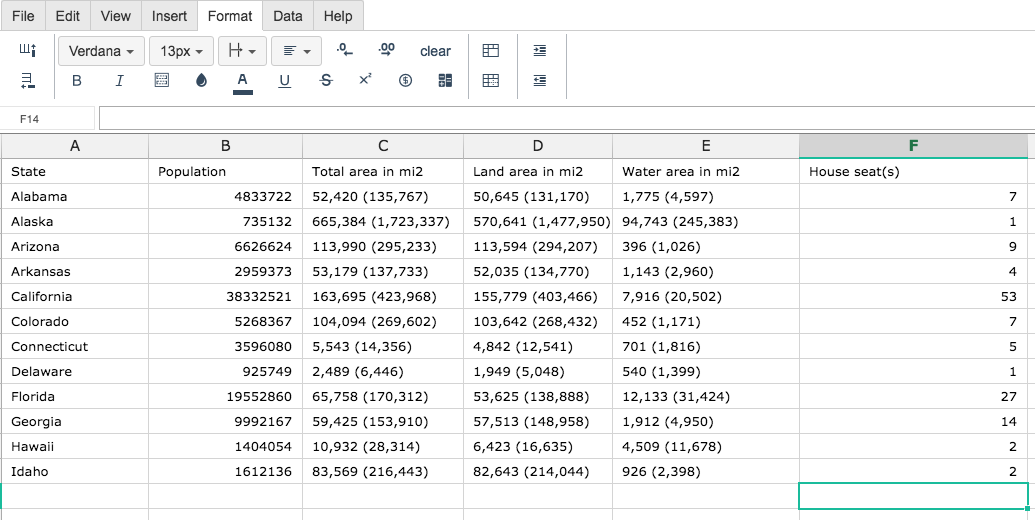
Enter INDEX( into the cell you have chosen to display the outcome:
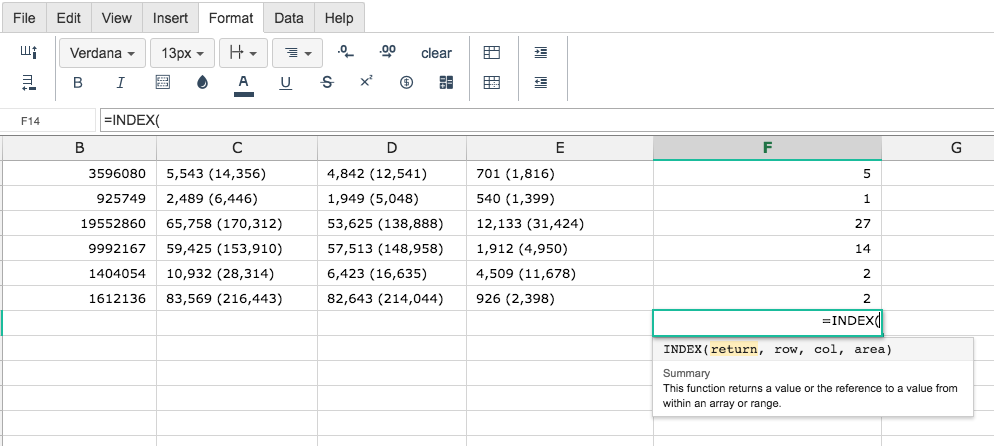
Fill in the 3 values corresponding to the cell range you wish to use.
For reference, the Syntax is:
INDEX(reference, [row], [column])
-
reference- The array of cells to be offset into. -
row- [OPTIONAL -1by default] - The number of offset rows. -
column- [OPTIONAL -0by default] - The number of offset columns.
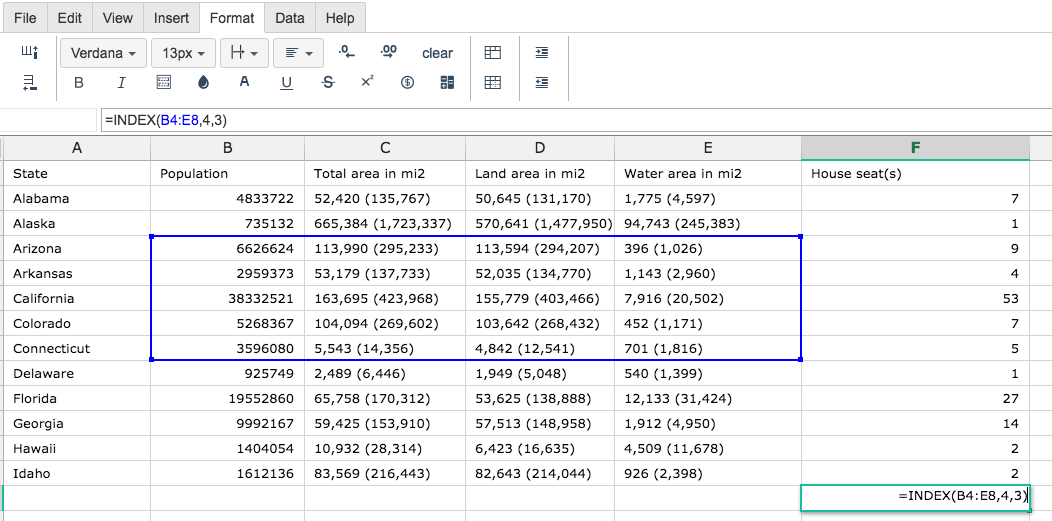
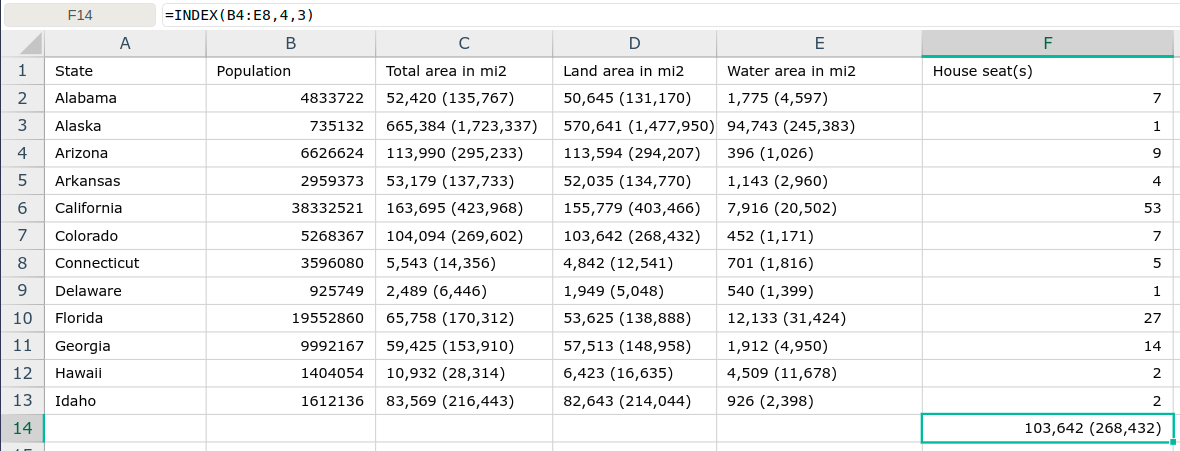
By adding the values you would like to calculate, Excellentable generates the outcome:
There were errors rendering macro:
- An unknown error occurred.
See Also
MATCH: Returns the relative position of an item in a range that matches a specified value. Note that while the Index function returns an item, the Match function returns the relative position of an item in a range.
OFFSET: Returns a range reference shifted a specified number of rows and columns from a starting cell reference.